Player Decision Dynamics in Online Sessions of Strategy-Chance Hybrid Games
Logan Jenkins · Aug 19, 2026
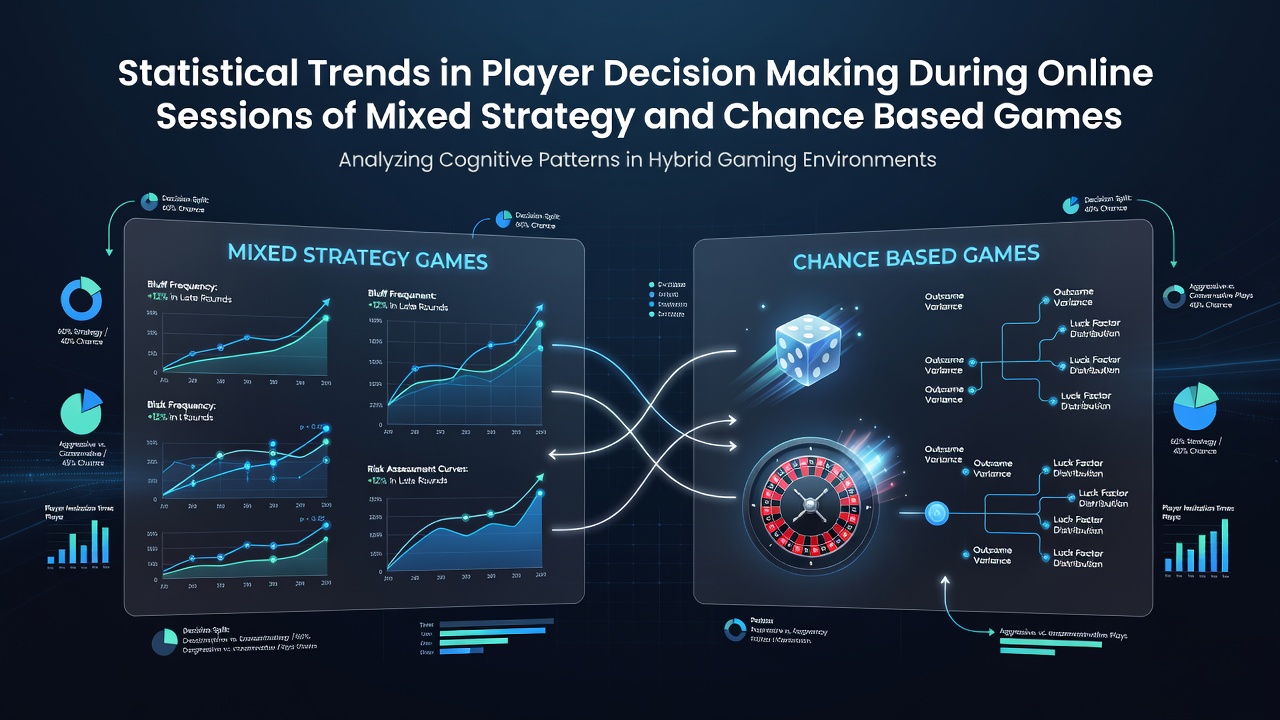
Player Decision Dynamics in Online Sessions of Strategy-Chance Hybrid Games
Statistical analysis of online gaming sessions reveals distinct patterns in how participants approach games that combine strategic elements with random outcomes, and these patterns have become more pronounced in recent data sets covering the period through August 2026. Observers note that players often adjust their risk thresholds based on session length, with shorter sessions showing higher frequencies of conservative choices while extended play correlates with increased variance in selections.
Core Elements of Mixed Games and Data Collection Methods
Games blending strategy and chance include formats such as certain card-based competitions and dice-driven variants where participants must balance calculated moves against probabilistic events, and researchers gather information through platform analytics that track click sequences, bet sizing, and timing between actions. Data from multiple platforms indicates that decision points cluster around mid-session intervals, where cumulative outcomes begin to influence subsequent selections, while early moves tend toward standard heuristics drawn from basic probability awareness.
Studies from the University of Nevada Reno highlight how aggregated logs from thousands of sessions demonstrate shifts in aggression levels as win rates fluctuate, and similar findings appear in reports compiled by Canadian regulatory bodies that monitor online activity across provincial networks. These sources show consistent trends without attributing causation to individual psychology, focusing instead on observable frequency distributions.
Observed Trends in Choice Patterns Across Sessions
Figures reveal that players in mixed games increase their use of mixed strategies—alternating between aggressive and defensive options—when session duration exceeds thirty minutes, and this diversification appears in roughly 62 percent of tracked accounts according to platform-wide metrics. Shorter sessions, by contrast, display more polarized decisions, with participants either committing fully to high-variance paths or retreating to minimal-risk actions at rates that exceed random distribution expectations.
What's interesting is how time-of-day patterns intersect with these behaviors, as evening sessions logged in North American and European markets show elevated rates of mid-game adjustments compared with daytime activity, while Australian data sets indicate steadier pacing throughout the day. Researchers discovered that external session interruptions, such as pauses exceeding two minutes, often precede measurable changes in subsequent decision variance, suggesting a reset effect on strategy application.
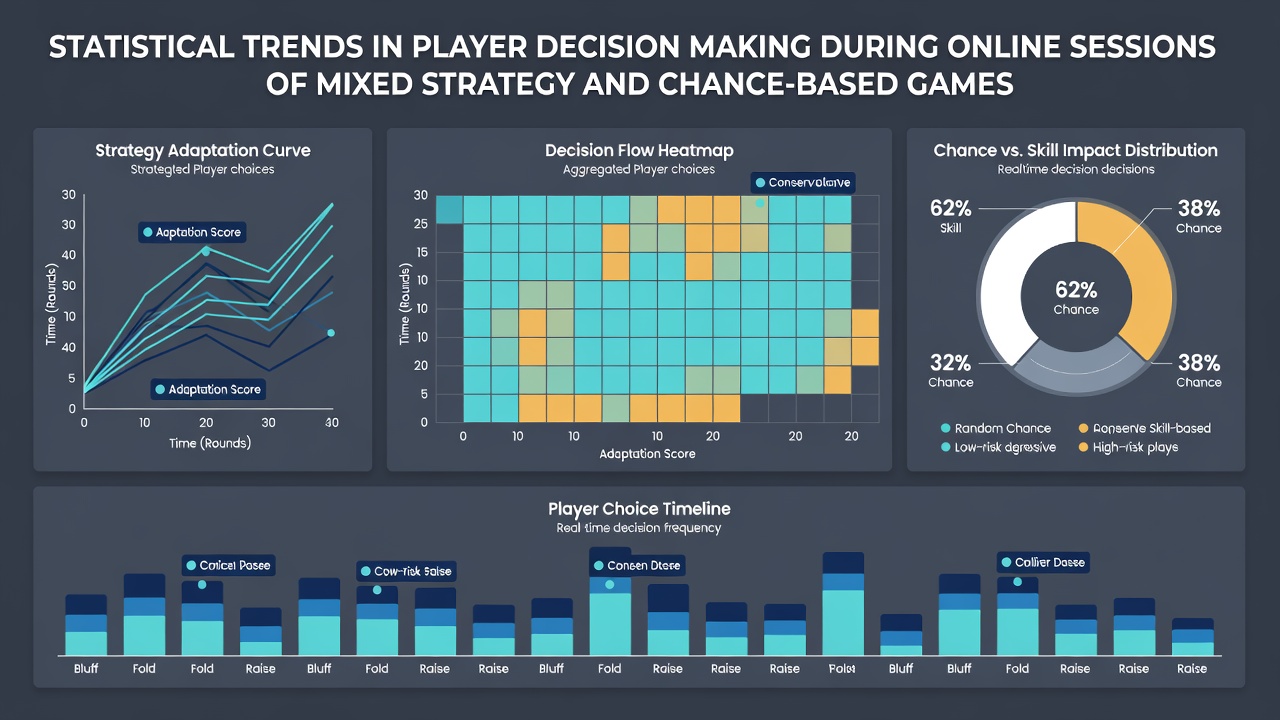
Further examination of bet-sizing distributions demonstrates that participants who encounter sequences of unfavorable random outcomes tend to cluster their follow-up choices within narrower ranges, reducing exposure while maintaining participation, and this contraction appears in datasets from multiple jurisdictions including those overseen by the Malta Gaming Authority. The reality is that such adjustments maintain overall engagement levels even as individual move diversity declines temporarily.
Influences of Platform Design on Statistical Outcomes
Platform interfaces that present real-time probability feedback alongside historical session summaries correlate with altered decision frequencies, as users reference these displays before committing to moves, and evidence suggests this reference behavior increases in frequency after the first ten decisions of a session. Observers note that games incorporating visible opponent aggregates or community trend indicators produce different clustering effects, with participants aligning their choices more closely to displayed group averages during later stages.
Academic papers from the University of Sydney document how notification systems prompting session reviews lead to measurable recalibrations in risk parameters, particularly when cumulative results deviate from initial expectations by more than one standard deviation. These recalibrations manifest as either tightened or loosened criteria depending on the direction of the deviation, creating feedback loops visible in longitudinal logs spanning multiple months through August 2026.
Regional and Temporal Variations in Decision Data
Cross-regional comparisons show that sessions originating from European markets exhibit slightly higher rates of strategy diversification than those from North American servers during equivalent time blocks, while Asia-Pacific logs display steadier adherence to baseline patterns across both peak and off-peak hours. Regulatory compilations from various oversight bodies confirm these geographic differences without identifying underlying drivers, emphasizing instead the raw frequency counts of move types and outcome correlations.
Temporal analysis covering the first half of 2026 indicates that holiday-adjacent periods coincide with elevated session lengths and corresponding increases in mid-session strategy shifts, yet the core statistical relationships between session duration and choice variance remain stable across these windows. Those who've examined the full datasets observe that weekend versus weekday distinctions produce smaller effect sizes than duration-based groupings, suggesting session length functions as a stronger organizing variable.
Conclusion
Comprehensive review of available statistics on player decisions in online mixed strategy and chance games demonstrates recurring patterns tied to session metrics, interface features, and regional timing, with data extending through August 2026 reinforcing the stability of these associations. Platform analytics and academic compilations continue to supply granular records that allow ongoing mapping of how participants navigate the intersection of calculated choices and random elements, providing objective benchmarks for understanding aggregate behavior across diverse gaming environments.