Uncovering Parallels Between Domino Placement Logic and Backgammon Doubling Cube Decisions
Ben Braun · Aug 7, 2026
Uncovering Parallels Between Domino Placement Logic and Backgammon Doubling Cube Decisions
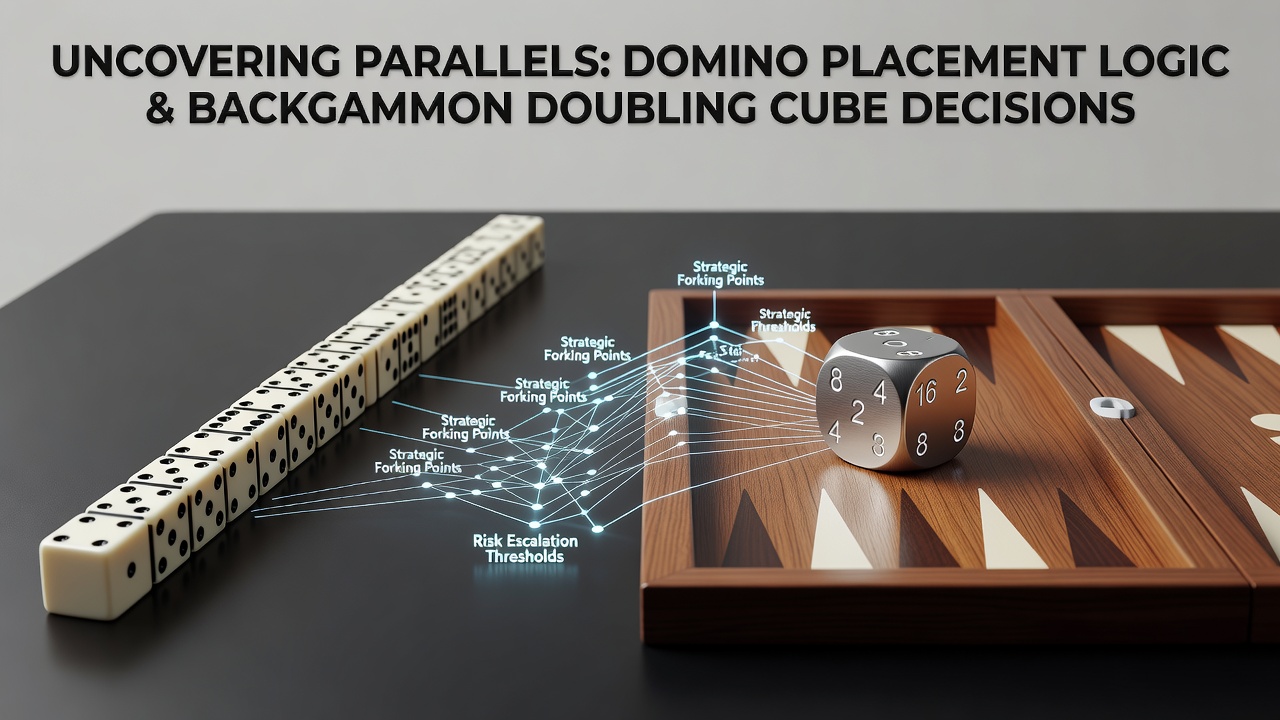
Domino placement logic and backgammon doubling cube decisions both center on sequential choices that shape control over the remaining game state, and researchers have documented how players evaluate matching constraints in one game against equity calculations in the other. Observers note that each system rewards accurate forecasting of opponent responses while managing limited resources on the board.
Core Mechanics of Domino Placement
Players arrange tiles so that adjacent ends display identical numbers, and successful sequences depend on conserving high-value pieces for later rounds while denying those options to opponents. Data from competitive play shows that early placements often prioritize blocking potential chains over immediate scoring, because the remaining tiles determine whether a position can be forced into a closed endgame. Those who study tournament records find that position evaluation relies on counting exposed numbers across the layout and estimating the probability that the opponent holds matching values in hand.
Mechanics of the Backgammon Doubling Cube
The doubling cube allows either player to offer a stake increase at the start of their turn, and acceptance transfers control of future offers to the opponent. Equity models developed by game theorists indicate that the decision hinges on comparing current winning chances against the multiplier, with adjustments for gammons and backgammons that alter the effective value of the cube. Figures from international matches reveal that top players accept doubles when their expected equity exceeds 25 percent at the two-cube level, and they decline when the position falls below that threshold after accounting for the cube's location.
Shared Decision Frameworks
Both games require participants to assess whether the current configuration grants sufficient leverage to commit additional resources. In dominoes this appears as the choice to play a tile that closes off one number while opening another, whereas in backgammon it surfaces when a player must decide if the present board justifies risking a higher stake. Analysts have observed that successful performers in each discipline maintain running tallies of remaining possibilities, updating those counts after every move or roll to refine their sense of control.
What's interesting is how information asymmetry functions across the two formats. Domino players hold hidden tiles that opponents cannot see directly, yet the visible layout gradually reveals distribution patterns. Backgammon players face uncertainty from dice rolls and hidden checker distributions behind the opponent's home board, yet the doubling cube serves as a visible signal of shifting advantage. Research indicates that experienced players treat both forms of hidden information by assigning ranges rather than fixed values to unknown elements.
Probability Assessment Patterns
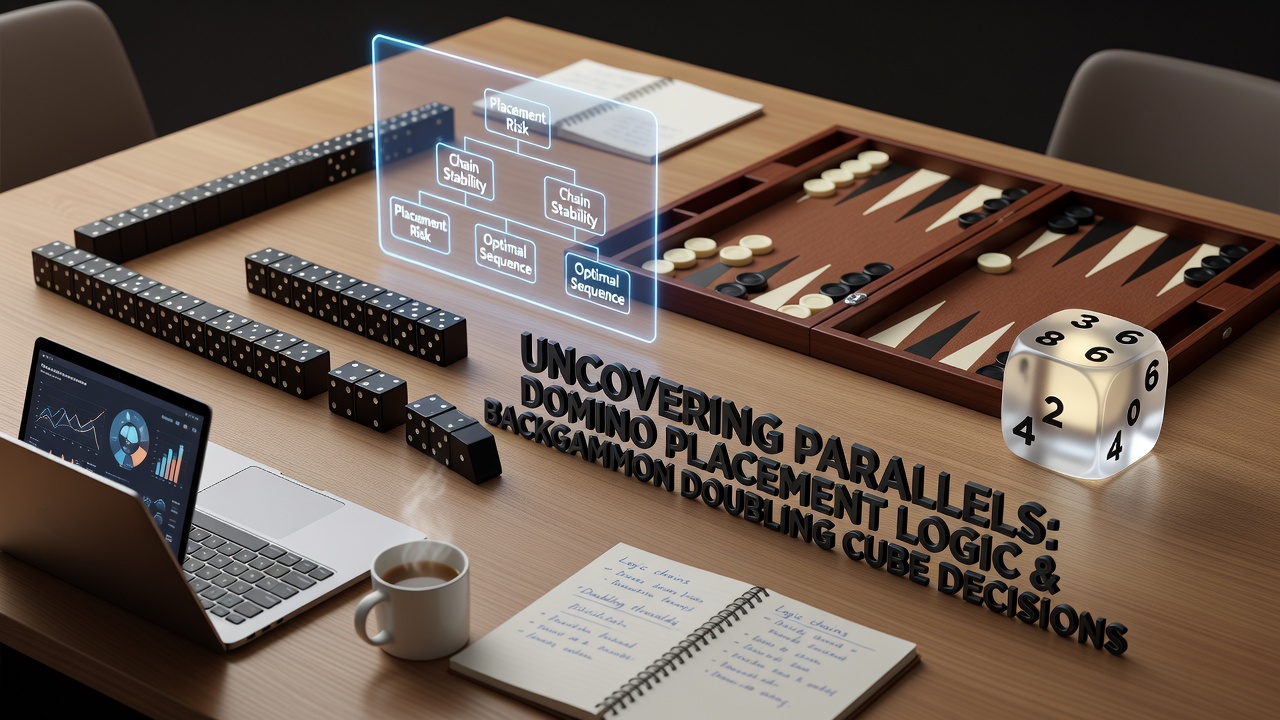
Studies conducted at institutions such as the Game Theory Network demonstrate that both activities reward incremental probability updates after each new piece of information arrives. A domino player who sees several sixes already played revises estimates for the remaining sixes in the opponent's hand, and this revision directly influences whether to extend or block that number. Similarly, a backgammon player who observes an opponent leave a blot recalculates the cube action based on the new racing or hitting chances, adjusting the offer or acceptance threshold accordingly.
Turns out the timing of commitment also aligns. Domino players often withhold certain tiles until the board forces a response, preserving flexibility for multiple branches. Backgammon players frequently delay the first double until their position stabilizes, avoiding the risk that an early cube offer hands the opponent control at a low level. Observers note that both patterns reduce the chance of overcommitting before the full distribution of remaining outcomes becomes clearer.
Position Evaluation Techniques
Competitive records compiled by the Canadian Gaming Society highlight common evaluation steps used in both games. Practitioners first identify the most restrictive constraints, whether those are unmatched numbers on the domino layout or exposed checkers vulnerable to hits in backgammon. They then project the most probable sequences that follow from those constraints, assigning weights based on the number of ways each sequence can occur. Finally they compare the projected outcomes against the cost of the next action, whether that cost is the loss of a potential scoring opportunity or the loss of cube control.
August 2026 tournament schedules include several cross-format strategy workshops that examine these evaluation steps side by side, allowing participants to test transfer of skills between the two games under controlled conditions. Attendance data from prior events shows steady interest in sessions that isolate the shared logic of resource commitment under uncertainty.
Conclusion
The documented parallels between domino placement logic and backgammon doubling cube decisions rest on shared requirements for information tracking, probability revision, and timed commitment. Players who master one system frequently adapt their methods to the other because both reward consistent assessment of leverage rather than isolated tactical brilliance. As competitive records continue to accumulate, analysts expect further refinement of the common frameworks that already connect these distinct games.